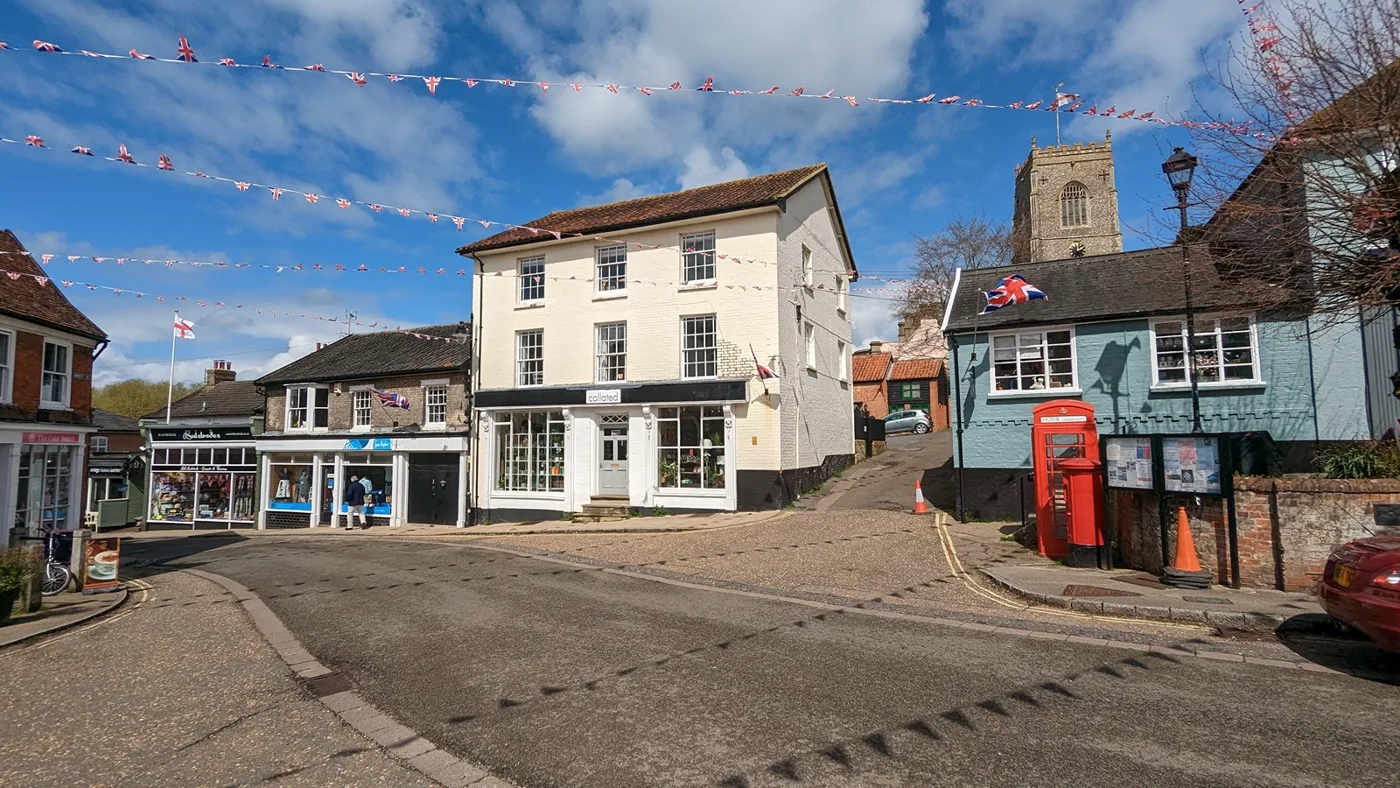

Expressions of interest for East Suffolk's £1.5m Thriving Places fund close on Monday 7 September. Grants run £5,000 to £50,000, but not for Felixstowe.
Community groups that want a share of East Suffolk Council’s £1.5m Thriving Places Investment Fund have until Monday 7 September to register an interest. That is the gate. Miss it and the next chance to get into a round does not open until 23 November.
The fund pays out in grants of £5,000 to £50,000 to town and parish councils, charities, village hall committees and constituted community groups. Round two is the second of seven rounds the council has published, running to early 2028.
Projects inside the parish boundaries of Felixstowe and Lowestoft are not eligible. That is a hard line and it is worth knowing before anyone in Felixstowe spends an evening on a form.
The dates for round two
The council’s fund page sets out four:
- Expressions of interest: open now, closing Monday 7 September.
- Full applications, by invitation only: Monday 14 September to Friday 23 October.
- Projects can start from Monday 30 November 2026.
- Projects must be finished within twelve months of the award.
The expression of interest is short and its only job is to confirm that a project is eligible. The council’s guidance says officers assess them within five working days of the window closing, and successful applicants then get a link to the full form. Getting through that stage is not the same as getting the money.
What is on offer
- £1,000,000 capital and £500,000 revenue, spread across the 2026/27 and 2027/28 financial years.
- Capital grants: £10,000 to £50,000. Revenue grants: £5,000 to £25,000.
- A project can combine the two, but the total cannot exceed £50,000.
- The council will fund up to 70% of eligible project costs. The other 30% is match funding, from the organisation or from another grant or loan.
- Volunteer hours count towards the match, valued at £13.13 an hour for over-18s.
One rule catches people out. The fund cannot be matched against money from another East Suffolk Council grant programme, so a group cannot stack it with something like the East Suffolk Youth Fund. The single exception in the guidance is the council’s own Town’s Development Programme, considered case by case.
Who can apply, and who cannot
Eligible:
- constituted community and voluntary groups
- registered charities
- not-for-profit organisations, including community interest companies limited by guarantee and charitable incorporated organisations
- village hall and recreation ground committees
- member associations
- town and parish councils
The organisation needs a governing document, a registered address in East Suffolk and a bank account in its own legal name. A community interest company must have three non-related directors.
Not eligible: individuals, sole traders, organisations based outside the UK, anyone applying on behalf of another organisation, and any company that distributes profits privately, including community interest companies limited by shares. A private business can be a partner in a project but cannot receive the grant.
The Felixstowe exclusion, in the council’s own words
The guidance is explicit. “The fund is not open to projects based in the parish boundaries for Lowestoft and Felixstowe. Applications can be made by organisations based within Lowestoft and Felixstowe, but only for project activity based outside of the two towns parish boundaries.”
So a Felixstowe charity is not barred. Its Felixstowe project is. The fund is aimed, in the council’s framing, at “market towns, villages and rural communities” and at places that “may sometimes feel overlooked”, in the words of council leader Cllr Caroline Topping in the announcement on 28 August.
That leaves Woodbridge, Melton, Wickham Market, Framlingham, Saxmundham, Leiston, Aldeburgh, Orford, Snape and every village between them inside the fund, and the district’s two biggest towns outside it.
What it will pay for
Projects have to meet at least one of four priority areas. The guidance gives worked examples, which are the most useful part of it:
- Thriving local centres and enterprise. Bringing an empty shop back into use as a community workspace; seating, planting, lighting or better paths in a village centre; upgrading a hall so it can host pop-up shops or small business events; starting a regular produce or makers’ market; lighting or CCTV; better broadband in community venues.
- Participation, skills and inclusion. Turning a village hall into a multi-use hub; ramps and hearing loops; digital skills, job-seeking or wellbeing sessions in rural areas; upgrading small sports or play facilities; community transport; workshops in green skills, heritage crafts or hospitality; spaces and activities for young people.
- Visitor economy, culture and local identity. Walking trails, interpretation boards, signs, benches, maps or cycle parking; small festivals and markets; restoring a heritage building to host exhibitions; community-designed public art.
- Green economy, sustainability and infrastructure. Solar panels, heat pumps or insulation in community buildings; community orchards, wildflower areas or ponds; walking and cycling links between villages; EV charging in community car parks; repair cafes.
What it will not pay for
- anything that has already started, or that will start before the panel decides
- land or property purchase
- core running costs or general staff costs, unless the post is project specific
- like-for-like replacement of equipment, including laptops and software
- projects that cannot be completed within twelve months
- activity promoting religious or political causes
- overseas travel, endowments, deficit funding or loan repayments
- sponsored, corporate or fundraising events
- grants to individuals or families
- anything that duplicates or displaces existing provision
- activity designed to meet a public body’s statutory obligations, with practical items such as fire alarms excepted
The paperwork to have ready
Applicants invited to the full stage have to upload the lot, and the council says a missing document can get an application rejected:
- governing document, such as a constitution or articles of association
- annual accounts, or management accounts if the annual ones are more than six months old
- a redacted bank statement or paying-in slip
- safeguarding policy for adults and children at risk
- equality, diversity and inclusion policy
- public liability insurance for at least £5m, plus employers’ liability if there are staff
- health and safety policy, and a risk assessment for event applications
- quotations, planning permission or building consent, and any lease of three years or more
The guidance also asks applicants to talk to their ward councillor first. It is not compulsory, but the form asks whether it happened.
What it means for you
If you run a village hall, a recreation ground, a parish council or a community group anywhere in the district outside Felixstowe and Lowestoft, Monday is the date that matters. The expression of interest is short, it is free, and it costs nothing but the time to check you are eligible.
Three practical points:
- Do not start the project. No purchases and no physical work before the panel decides, or the project stops being eligible. Planning and permissions can be sorted out first, and in fact must be: any permission or landlord consent has to be in place before the full application goes in.
- Nail the budget down. The guidance is blunt that costs have to be broken down item by item, with the right number of quotes, and that the council will reduce or refuse an award that exceeds its thresholds.
- Ask first if you are unsure. Council officers can give informal advice on eligibility at the expression of interest stage. The published number is 01502 523334. The guidance PDF gives the email address twice and spells it two different ways, as grants@eastsuffolk.gov.uk and grant@eastsuffolk.gov.uk, so use the link on the fund page if you would rather not guess.
If your project needs planning consent before it can be funded, our East Suffolk planning page explains how applications are published and how long the process runs.
Sources
- East Suffolk Thriving Places Investment Fund, East Suffolk Council, read 5 September 2026
- East Suffolk Thriving Places Investment Fund guidance (PDF), East Suffolk Council
- Organisations encouraged to apply for second round of Thriving Places Investment Fund, East Suffolk Council, 28 August 2026
Have your say