
Woodbridge's band D bill is £2,420.52 this year, up 5.8%. All eight bands, where every pound goes, and why the town council took £29.59 more than last year.
A band D home in Woodbridge pays £2,420.52 in council tax this year, up £132.46 on last year. That is a rise of 5.79%, steeper than any of the four organisations on the bill announced on its own.
The reason is the smallest of the four. Woodbridge Town Council put its share up 18.9%, from £156.95 to £186.54, while the county, the police and the district all raised theirs by between 2.95% and 5.16%.
East Suffolk Council publishes the county, police and district figures on its Council Tax page but leaves the amount you actually pay in a separate PDF, because the total depends on which of the district’s 147 parish and town areas you live in. This page puts them back together.
All figures are from East Suffolk Council’s setting of council tax at Full Council on 25 February 2026, checked on 24 August 2026.
Woodbridge council tax 2026-27, bands A to H
| Band | 1991 value | Full year | Single person (25% off) |
|---|---|---|---|
| A | Up to £40,000 | £1,613.68 | £1,210.26 |
| B | £40,001 to £52,000 | £1,882.63 | £1,411.97 |
| C | £52,001 to £68,000 | £2,151.57 | £1,613.68 |
| D | £68,001 to £88,000 | £2,420.52 | £1,815.39 |
| E | £88,001 to £120,000 | £2,958.41 | £2,218.81 |
| F | £120,001 to £160,000 | £3,496.31 | £2,622.23 |
| G | £160,001 to £320,000 | £4,034.20 | £3,025.65 |
| H | Over £320,000 | £4,841.04 | £3,630.78 |
The full-year figures are Woodbridge’s row in the council’s total charge for each band for each town and parish council 2026-27. The single person column is those figures less the 25% sole-occupier discount, worked out here rather than published by the council.
Where the money goes
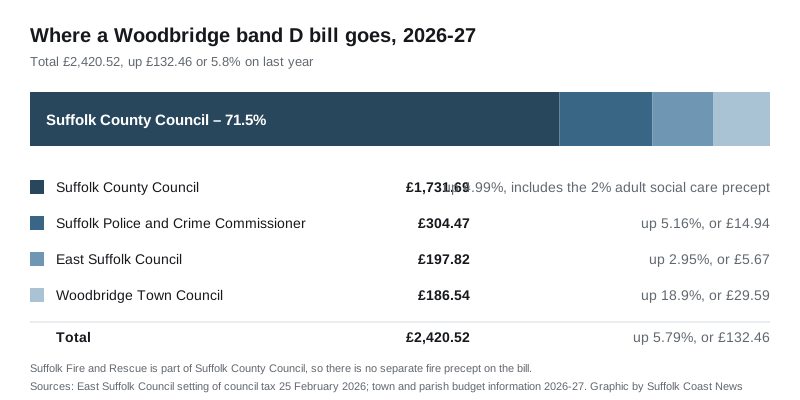
Four bodies take a share of the bill, and one of them takes most of it.
| Body | Band D share | Change |
|---|---|---|
| Suffolk County Council | £1,731.69 | up 4.99% |
| Suffolk Police and Crime Commissioner | £304.47 | up 5.16% |
| East Suffolk Council | £197.82 | up 2.95% |
| Woodbridge Town Council | £186.54 | up 18.85% |
There is no separate fire precept. Suffolk Fire and Rescue is run by Suffolk County Council, so it comes out of the county’s share rather than appearing as its own line.
Suffolk County Council agreed an £850m budget in February, with £46.5m of savings. Its 4.99% is 2.99% for general services plus a 2% adult social care precept. The council put the weekly increase at £1.58 for a band D home and £1.23 for a band B, which it says is the most common band in Suffolk.
The Police and Crime Commissioner went for £14.94, just under the £15 maximum the government allowed without a referendum. Suffolk’s Police and Crime Panel approved it on 30 January by eight votes to one. The panel’s report notes the alternative on the table was a 3.45% rise, which would have left the Constabulary £1.4m short in 2026/27. Of 1,206 responses to the PCC’s public survey, 57% backed the increase.
East Suffolk Council takes the smallest share of the three principal authorities. It approved its budget on 25 February, committing more than £58m of General Fund revenue to services including waste collection and parking. Its increase is £5.67 a year for a band D home, which the cabinet member for resources described as 11 pence a week.
Why Woodbridge Town Council took 18.9% more
This is the part of the bill nobody announces, and it is where Woodbridge’s rise came from.
The town council’s precept went from £555,624 to £654,757, a rise of £99,133. Its own budget information, published by East Suffolk for every parish demanding more than £140,000, shows where the money went. The single biggest change is staffing, which almost doubled:
| Heading | 2025/26 net | 2026/27 net |
|---|---|---|
| Staffing | £197,417 | £394,027 |
| Administration | −£101,208 | £58,923 |
| Parks and playground upgrades | £20,000 | £23,149 |
| Other amenity areas | £83,429 | £33,519 |
| Public conveniences | £2,000 | £18,814 |
| Grants | £16,000 | £25,000 |
| Movements on reserves | £236,332 | £13,437 |
The administration line moved because a £217,833 income item in 2025/26 fell to £59,780, and the reserves line fell by £222,895. Total gross spending actually went down, from £785,118 to £733,990. What rose was the share of it funded by the precept rather than by income and reserves.
At £186.54, Woodbridge’s town council charge is 85% above the district average parish precept of £100.82 at band D. Across all 147 parish and town areas in East Suffolk, Woodbridge has the fourth highest band D bill, behind only Lowestoft (£2,433.15), Framlingham (£2,429.53) and Rendlesham (£2,426.21).
Fourteen of those 147 areas have no parish precept at all, and pay the bare county, police and district total of £2,233.98 at band D. Some nearby comparisons:
| Area | Band D 2026-27 |
|---|---|
| Lowestoft | £2,433.15 |
| Framlingham | £2,429.53 |
| Woodbridge | £2,420.52 |
| Leiston | £2,420.08 |
| Saxmundham | £2,415.63 |
| Aldeburgh | £2,354.81 |
| Southwold | £2,349.05 |
| Felixstowe | £2,313.95 |
| Melton | £2,305.97 |
| Walberswick | £2,271.77 |
A 10p error on the council’s own page
East Suffolk’s band A row does not add up. Its Council Tax page gives the county’s band A charge as £1,154.56. Six ninths of the band D county charge of £1,731.69 is £1,154.46, and the £1,489.32 annual total printed in the same row is calculated from £1,154.46, not from the figure alongside it.
The error is only in the county column of the web page. The band A total is right, and the parish PDF that produces the £1,613.68 Woodbridge figure uses the correct number. Every other band on the page adds up exactly.
Checking and challenging your band
Bands were set on what a property would have sold for on 1 April 1991, not on what it is worth now. That is why a house built last year in Woodbridge can sit in a lower band than a Victorian terrace round the corner.
- Look up your band, and your neighbours’, on gov.uk/council-tax-bands.
- To challenge it, go to the Valuation Office Agency, not to East Suffolk Council. The council cannot change a band.
- Keep paying while a challenge is outstanding. A band challenge does not suspend the bill.
Appeals about liability, discounts or exemptions are different, and those do go to the council’s revenues service. They must be made in writing, and the council has two months to respond before you can take it to the Valuation Tribunal.
Discounts and exemptions
East Suffolk does not run its own revenues service. Council tax, housing benefit and business rates are all handled by the Anglia Revenues Partnership, a shared service based in Thetford that also covers Breckland, East Cambridgeshire, Fenland and West Suffolk. That is where the discount pages live, and why searching the East Suffolk website for them turns up almost nothing.
- Single person discount: 25%. Only on your main home, never on a second home. If someone moved out last year and you are still paying full price, the discount is backdated to the date they left, not to the date you tell the council.
- Students: a household of only full-time students is exempt. All but one a student means 25% off. Two or more non-students means no discount at all.
- Apprentices are not students. An apprentice living alone can get 50% off, or 25% if another adult lives there, provided they earn no more than £195 a week gross.
- Council Tax Reduction is means tested. Working age applicants need less than £10,000 in savings and capital; pension age applicants less than £16,000.
- Empty and unfurnished: 100% discount for two weeks only. That is the shortest window of any council in the partnership; Breckland allows a month.
- Empty and uninhabitable: 25% discount for up to 12 months.
Second homes and long-term empties pay double, or more
This matters more on this coast than almost anywhere. Since 1 April 2025 East Suffolk charges a 100% second home premium, so a furnished property with nobody living in it as their main home pays 200% of the normal bill. On a Woodbridge band D that is £4,841.04.
Long-term empty homes pay more still, on a sliding scale running since April 2024:
| Empty for | Premium | You pay |
|---|---|---|
| 1 to 5 years | 100% | 200% |
| 5 to 10 years | 200% | 300% |
| 10 years or more | 300% | 400% |
Several classes are excluded by law, including annexes, armed forces accommodation, job-related dwellings, caravan pitches and moorings, and seasonal homes that cannot legally be lived in year round. Property being actively marketed for sale is exempt for 12 months by statute, and East Suffolk has voted to extend that to 24 months, which is a local decision rather than a national one. Property being marketed to let gets 12 months.
East Suffolk offers no other discretionary exceptions to the empty homes premium, though the section 151 officer keeps a discretion to waive the second home premium in cases of hardship or vulnerability.
What the district collects
Across East Suffolk, residents will pay £225.49 million in council tax in 2026-27. The council’s own breakdown of where it goes:
- Suffolk County Council: £167.24m, 74.17%
- Police and Crime Commissioner: £29.4m, 13.04%
- East Suffolk Council: £19.1m, 8.47%
- Town and parish councils: £9.74m, 4.32%
The average band D bill across the whole district, including parish precepts, is £2,334.80. Woodbridge is £85.72 above it.
Also on this site: Woodbridge bin collection days, parking in Woodbridge and East Suffolk planning news.
Have your say